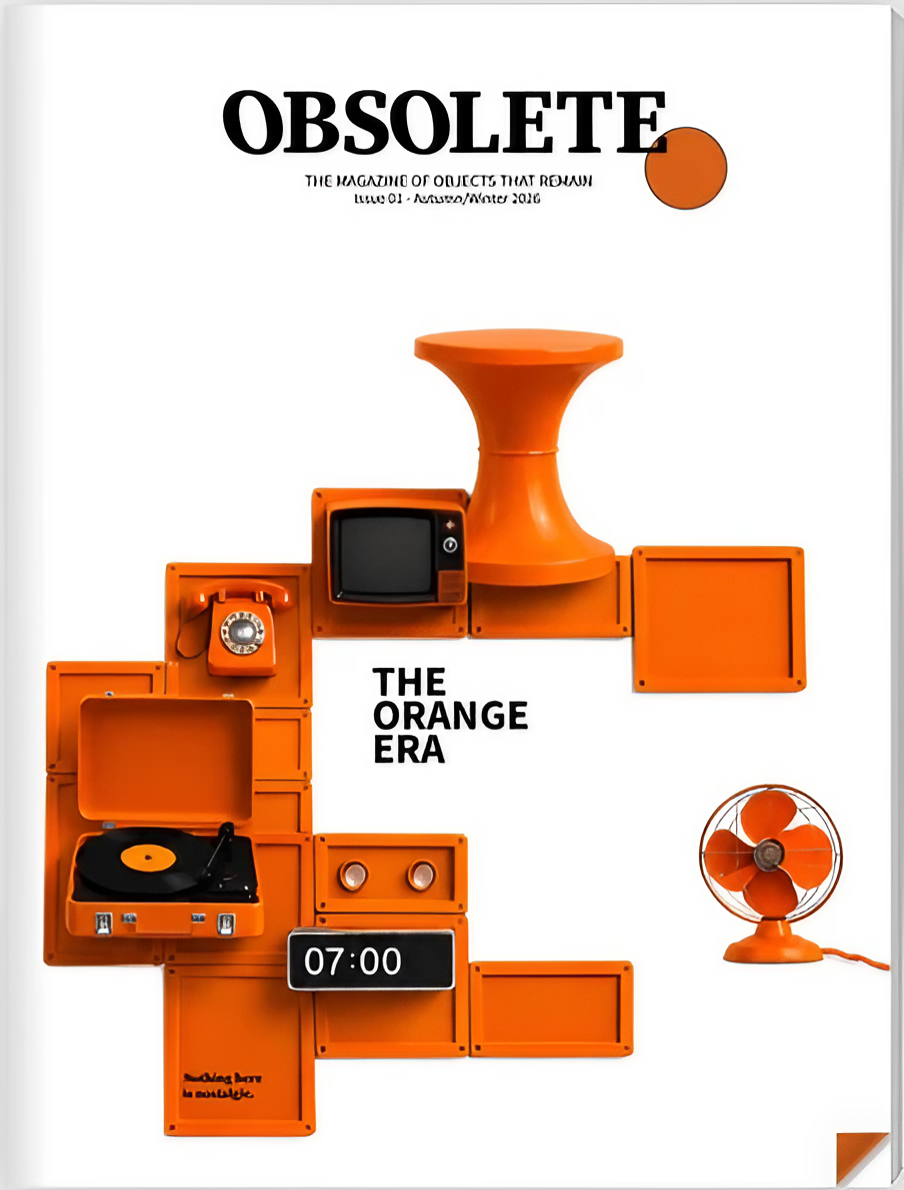
THE ORANGE ERA - ISSUE 01
Objects are never just objects.
They tell us how people lived, worked, communicated, and imagined the future.
They reveal the habits, gestures, and everyday rituals of another time.
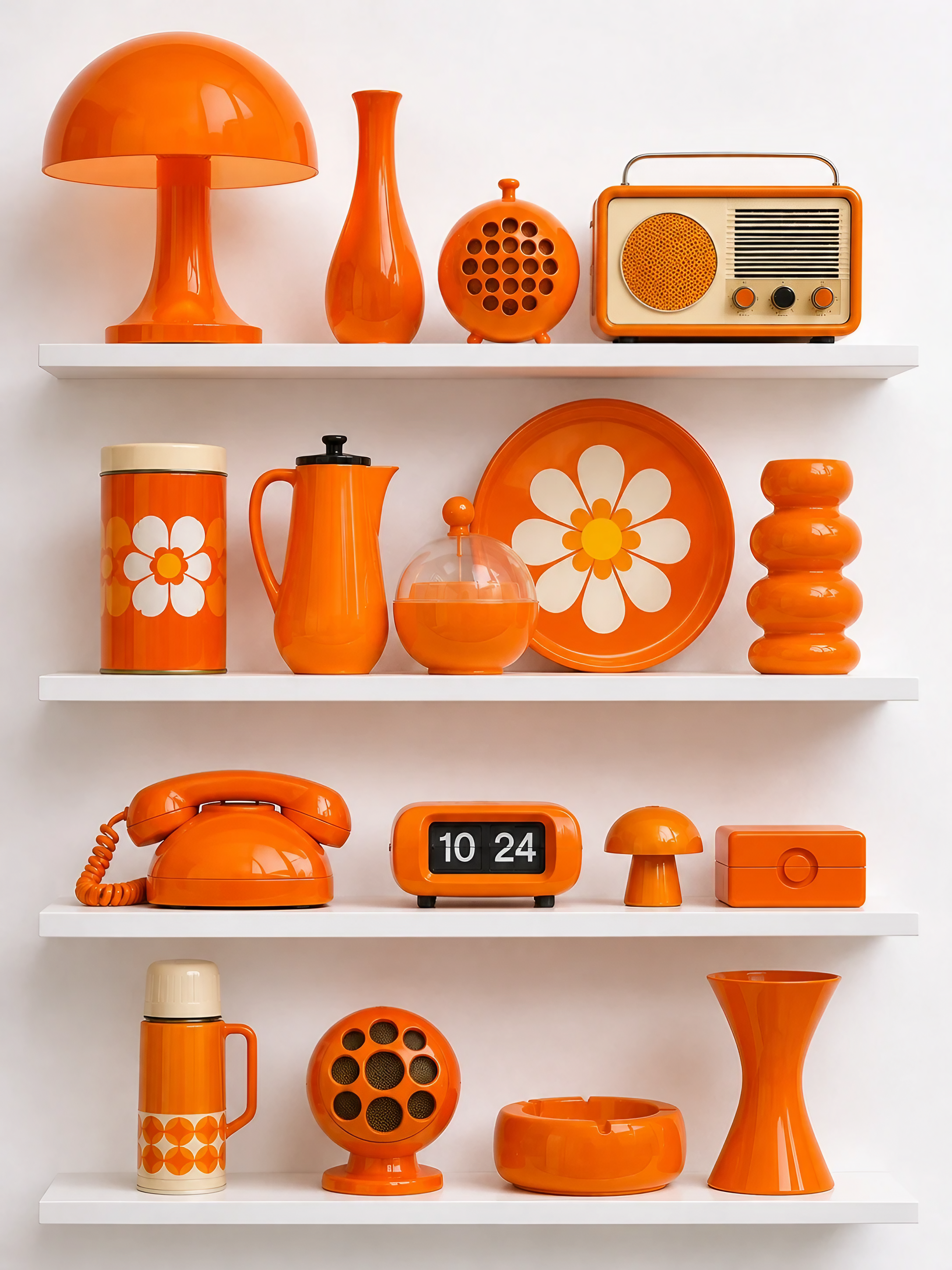
In the 1960s and 1970s, orange appeared everywhere: on telephones, typewriters, record players, furniture and household objects. It became part of a visual language that reflected an era of experimentation, optimism and change.
But beyond their colours and shapes, these objects tell other stories.
Through visual essays, photographs, detailed examinations and personal accounts, OBSOLETE explores how everyday objects were designed, used and experienced and what remains of them today.
This first issue brings together design, history and lived experience, from iconic creations to ordinary objects that once shaped daily life.
One era. Countless stories.
More than nostalgia.
110 PAGES · DIGITAL EDITION + AUDIO · €10
Read on any device: computer, tablet, or smartphone.
Already purchased? Read your issue
Can’t find your confirmation email?
Please check your spam or junk folder.
EXPLORE ISSUE 01 - FREE PREVIEW WITH AUDIO.
TURN THE PAGES. LISTEN TO THE SOUNDS ON PAGE 2.
CONTEXT.
Why did orange become one of the defining colours of the 1960s and 1970s? Why did an entire generation abandon restrained interiors for plastic furniture, futuristic shapes and vivid colours?
Was this a simple change in taste, or did it reflect something much deeper about society, technology and the way people imagined the future?
THE ORANGE ERA
When colour became a statement.
After decades of restrained interiors, orange appeared everywhere: in fashion, advertising, cinema, furniture and everyday objects.
But why orange? What role did Pop Art, the development of new plastics and the optimism of the Space Age play in this transformation?
From Verner Panton's immersive interiors to Joe Colombo's modular furniture and Ettore Sottsass's provocative designs, this article explores how colour became a language of freedom, individuality and modernity.
And raises another question: was the Orange Era a genuine liberation, or simply a new form of conformity?
TAM TAM: 1968
A plastic stool that challenged tradition.
No wood. No upholstery. No elaborate craftsmanship.
Designed by Henry Massonnet in 1968, the Tam Tam was inexpensive, lightweight and easy to move. Its hourglass silhouette challenged the idea that furniture had to be heavy, permanent or passed down through generations.
How did such an ordinary object become an icon of a changing domestic culture?
A small stool with a much larger story.
VOICES
Twelve designers. Twelve perspectives.
What did the designers and creative thinkers of this period believe about the future?
From Joe Colombo and Verner Panton to Gae Aulenti, Dieter Rams, Charles Eames and Pierre Cardin, twelve perspectives reveal different approaches to design, imagination, technology and everyday life.
Some believed in radical experimentation. Others defended simplicity, functionality and lasting design.
Together, their words offer a glimpse into the ideas that shaped the objects and spaces of their time.
KEEPING TIME.
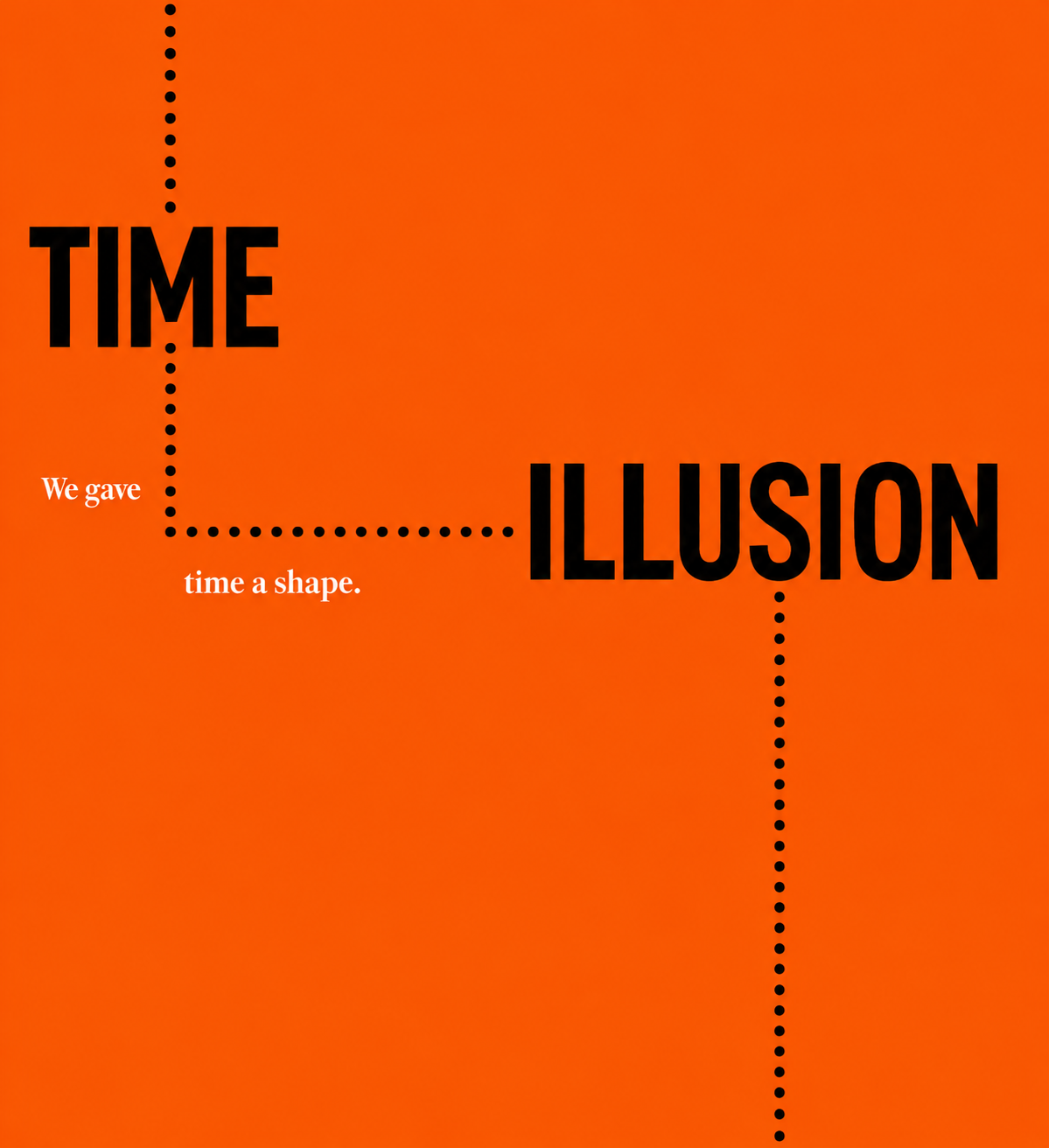
Can we really capture time, or only watch it disappear?
From the changing numbers of a flip clock to the rotating rings of a Ring-A-Date calendar, everyday objects gave time a physical presence. Hours, days and months became something we could see, touch and manipulate.
RING-A-DATE: 1970
A perpetual calendar that turns the passing of days into a simple mechanical ritual.
FLIP CLOCK
Before digital screens, time moved with a click. A look at the mechanism and the distinctive visual language of the flip clock.
1969: A YEAR LIKE NO OTHER
The year humans first walked on the Moon. But what else made 1969 a defining moment, and why does it still occupy such a powerful place in our collective memory?
DESIRE.
Why do we desire certain objects? Is it their design, what they promise, or the lives we imagine around them?
Some objects become symbols of freedom, creativity or modernity. Others carry memories that extend far beyond their original purpose.
VALENTINE
More than a typewriter.
Bright red, portable and unmistakable. Ettore Sottsass's Valentine challenged the traditional image of the office machine and turned an everyday tool into an object of desire.
ELSEWHERE
The art of finding what you weren't looking for.
From the sprawling Braderie de Lille to Tokyo's carefully curated vintage markets, from the fragments of Athens to Amsterdam's IJ-Hallen.
Four markets, four different experiences of discovery. Why do we spend hours searching through forgotten objects, often without knowing what we want?
And why is the pleasure sometimes in the search rather than the purchase?
A CONVERSATION WITH RASA
Typing in occupied Lithuania.
What did everyday life look like in Soviet Lithuania, far removed from the colourful consumer culture of the West?
Rasa recalls a childhood shaped by scarcity, identical furniture, handmade clothes and the absence of commercial advertising.
From the excitement of New Year's mandarins to her first encounters with a typewriter, her memories reveal another relationship with objects — one shaped not by abundance, but by what was available.
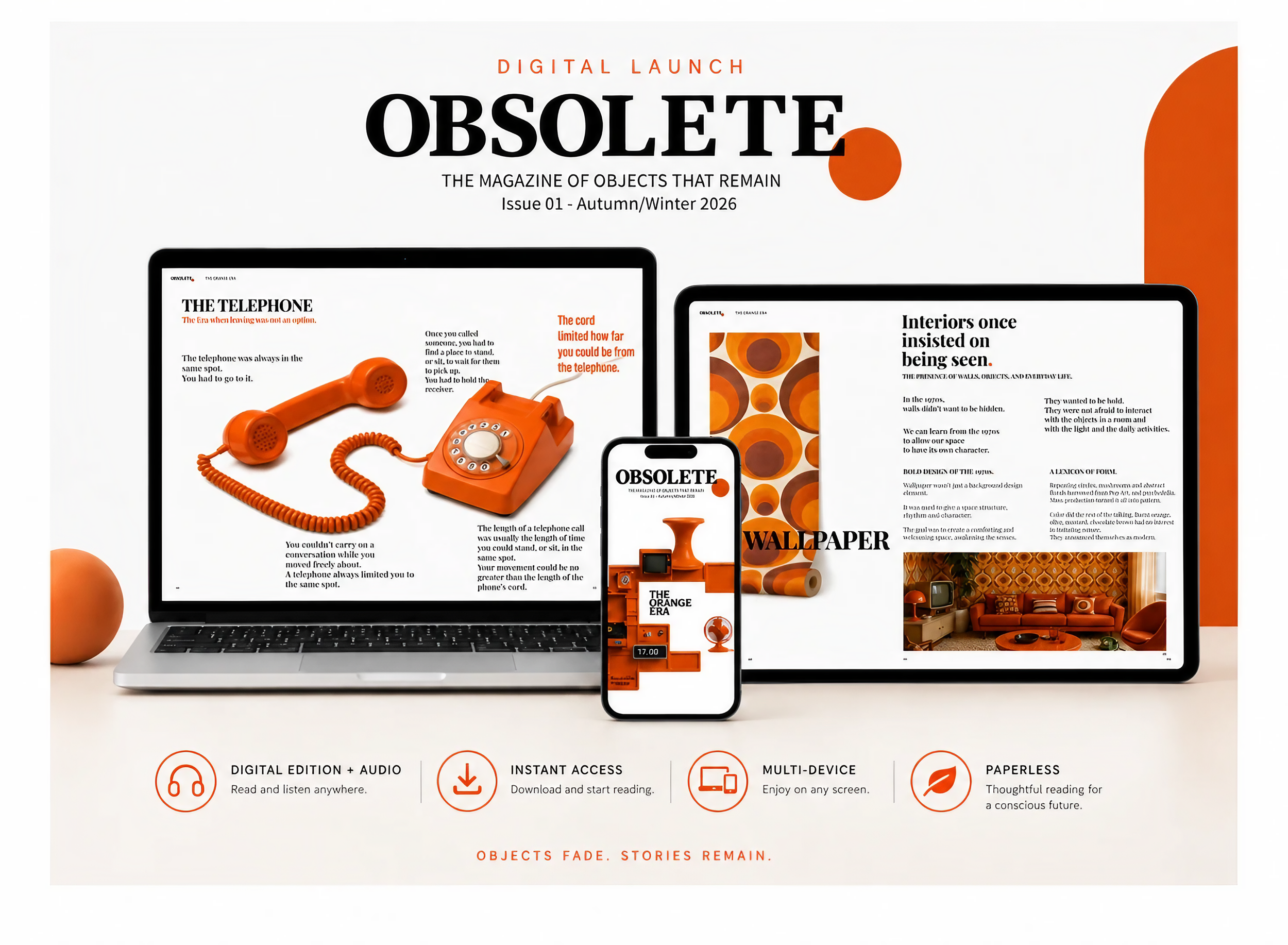
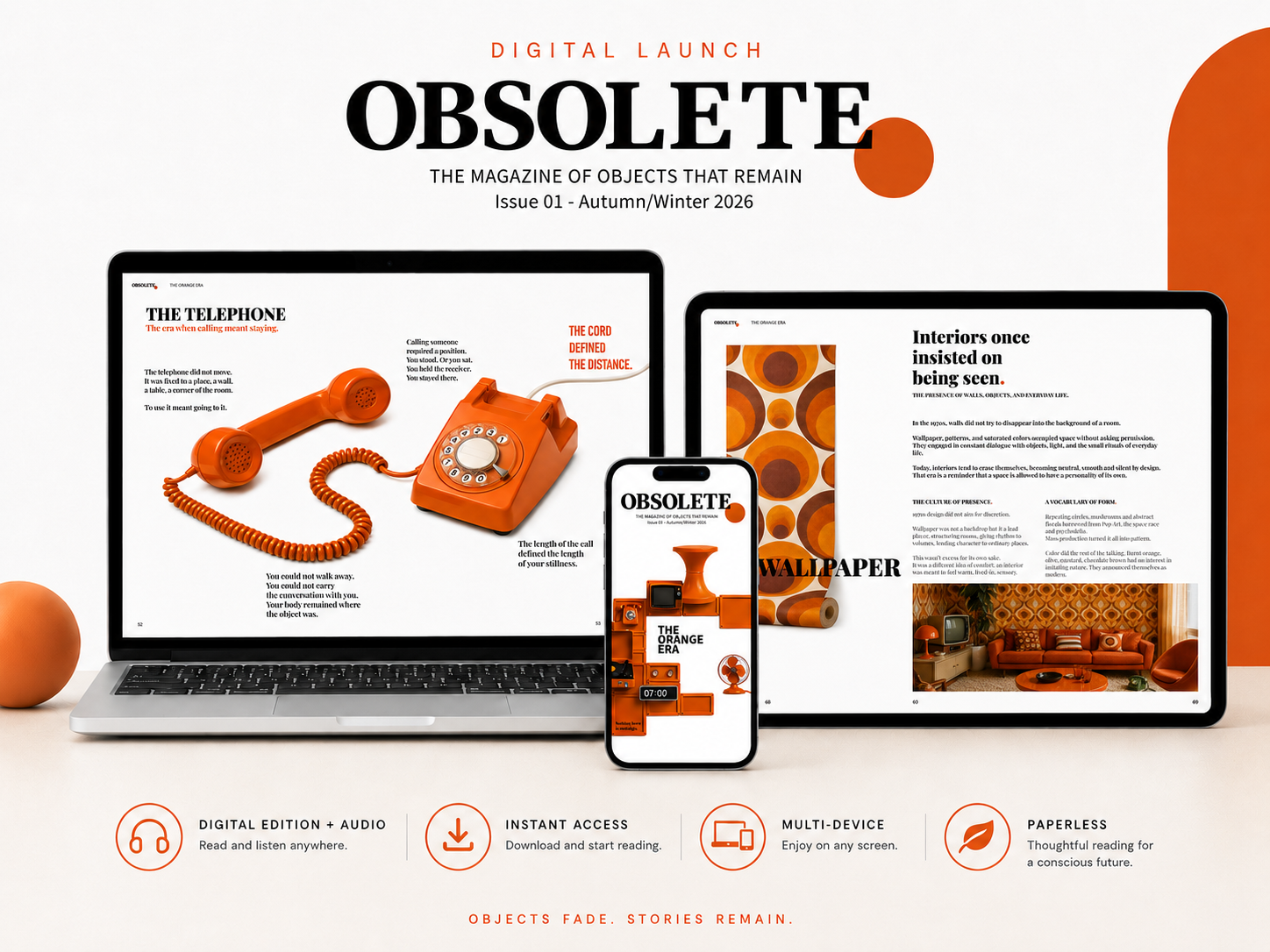
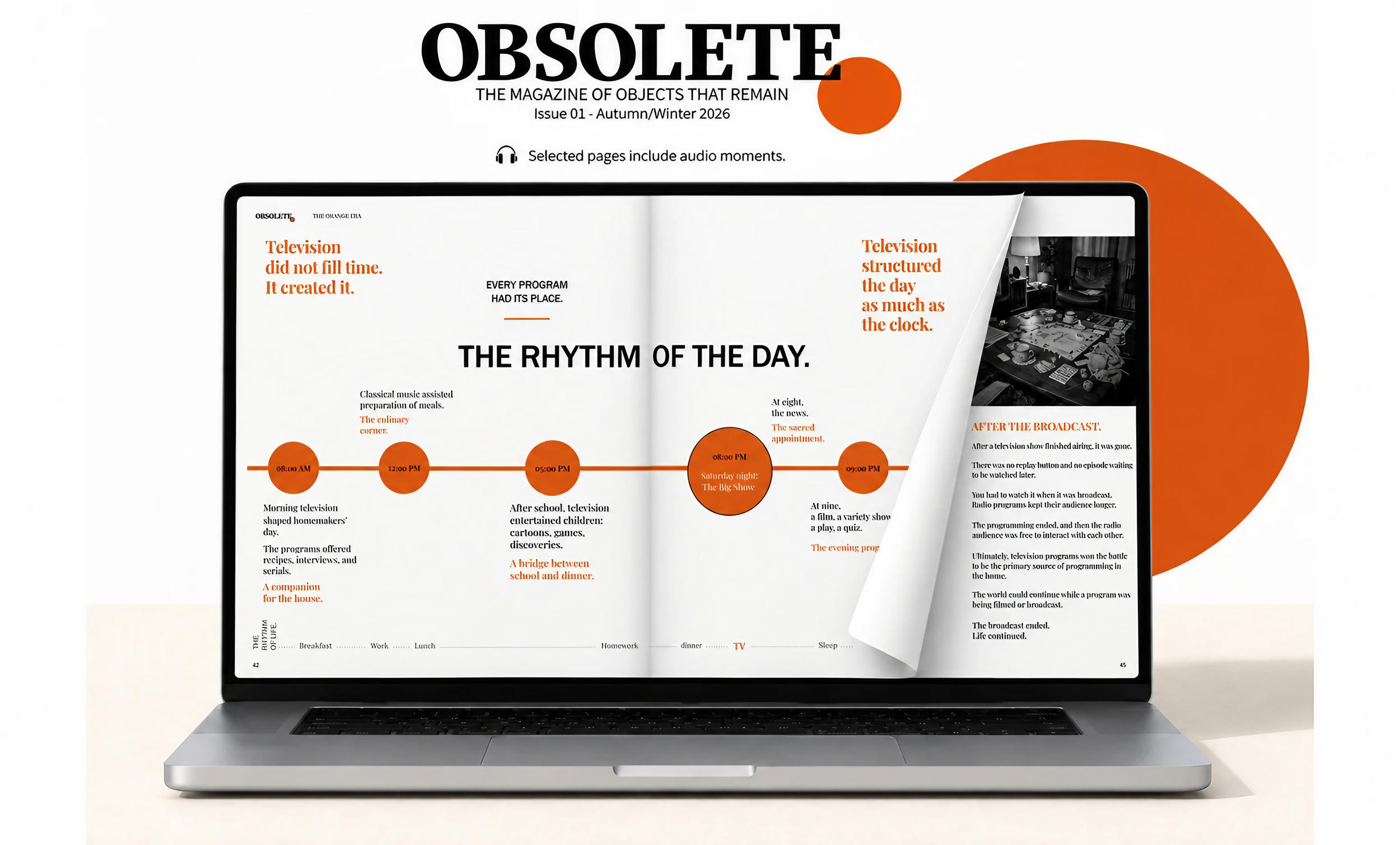
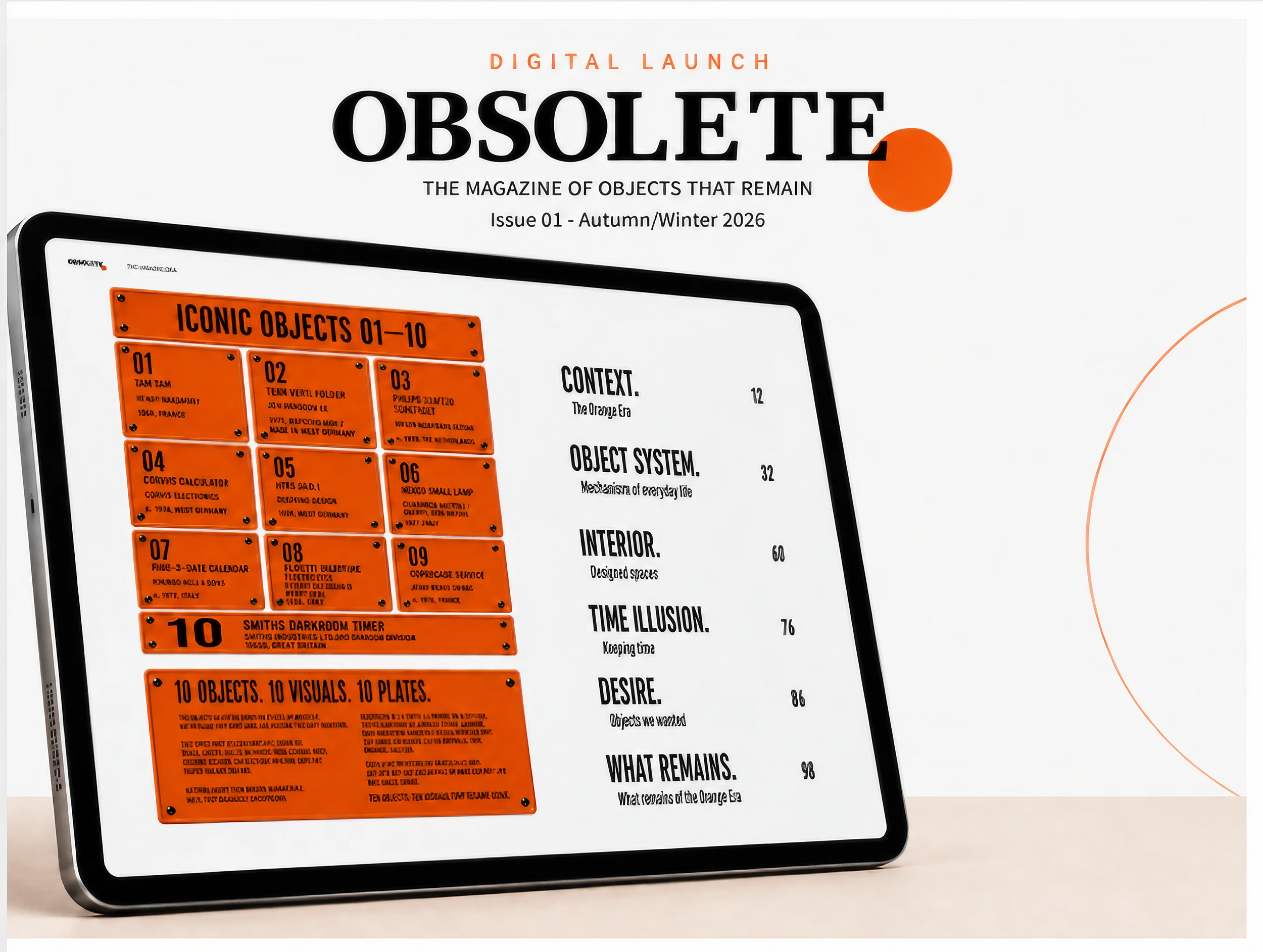
Travel back to when everyday life was changing, and the future seemed full of possibilities.
Discover a world connected to the past, with traces still present in our lives today.
Essays, an interview, iconic objects, visual stories, and selected audio moments are featured throughout the issue.
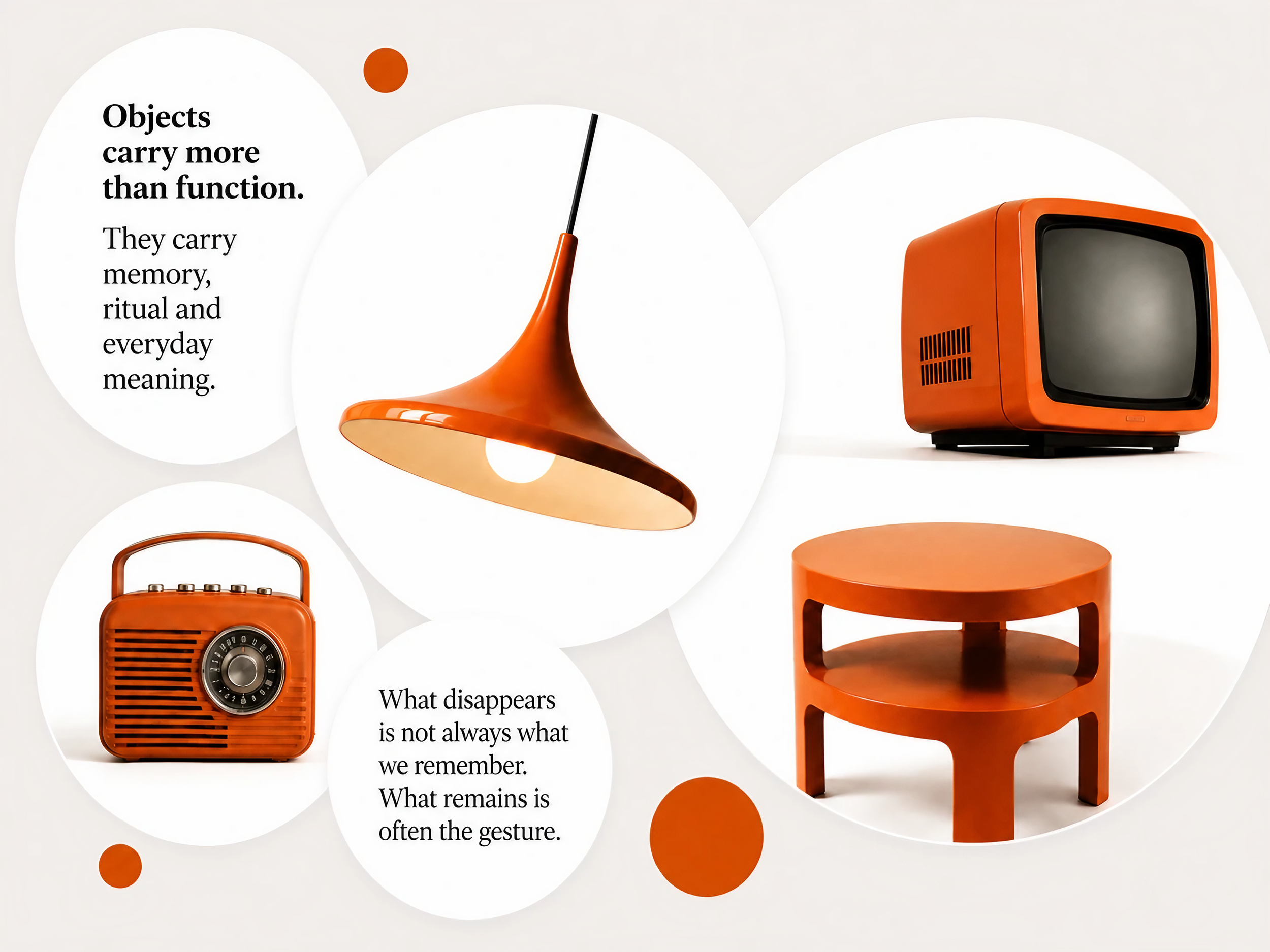
The sounds of these objects have almost faded from our memory…!
The click of a camera shutter.
The sound of a telephone dial returning.
The clack of typewriter keys.
We made these gestures without thinking.
Waiting was also part of everyday life.
We waited for the photo to develop,
for a cassette to rewind
and for the TV show to begin.
Perhaps remembering the pauses helps to understand why we remember some objects, even if we do not remember using them.
Objects get old,
get broken,
get modified.
However, we might remember the sound they made, or their colour. Sometimes we remember a shape before its name returns to us.
We see an object and get a flashback to something associated with that object.
While we might not need the object anymore,
it reminds us of things we had long since forgotten.